

Mentor Hills Post Acute
Rehabilitation & Therapy Services
Short-Term Rehab & Therapy
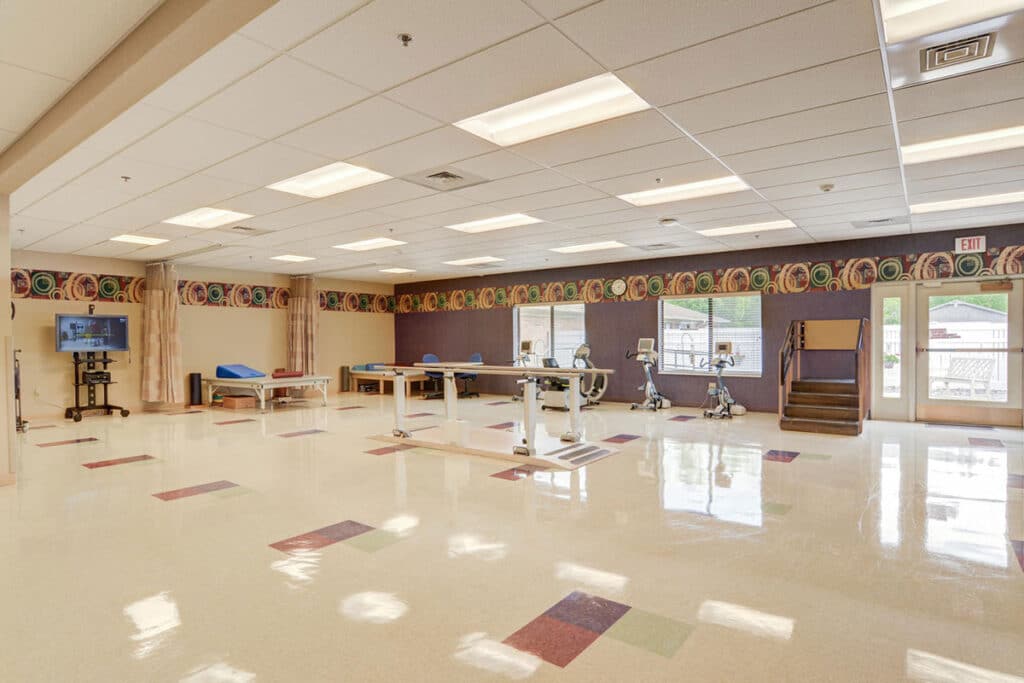
Our physical, occupational, and speech therapists help patients rebuild strength, develop functional mobility, and perform activities of daily living for a successful return home. Our therapies are offered 7 days a week for your convenience. Our in-house rehab gym is over 4,000 square feet in size. Whether you’re recovering from an illness, surgery, or major medical event, Mentor Hills Post Acute is committed to helping you rebuild strength, restore confidence, and regain independence at your own pace.
Physical Therapy (PT)
What is the goal of physical therapy?
Our physical therapy team works to help residents reach their highest level of independence.
How does physical therapy work at Mentor Hills?
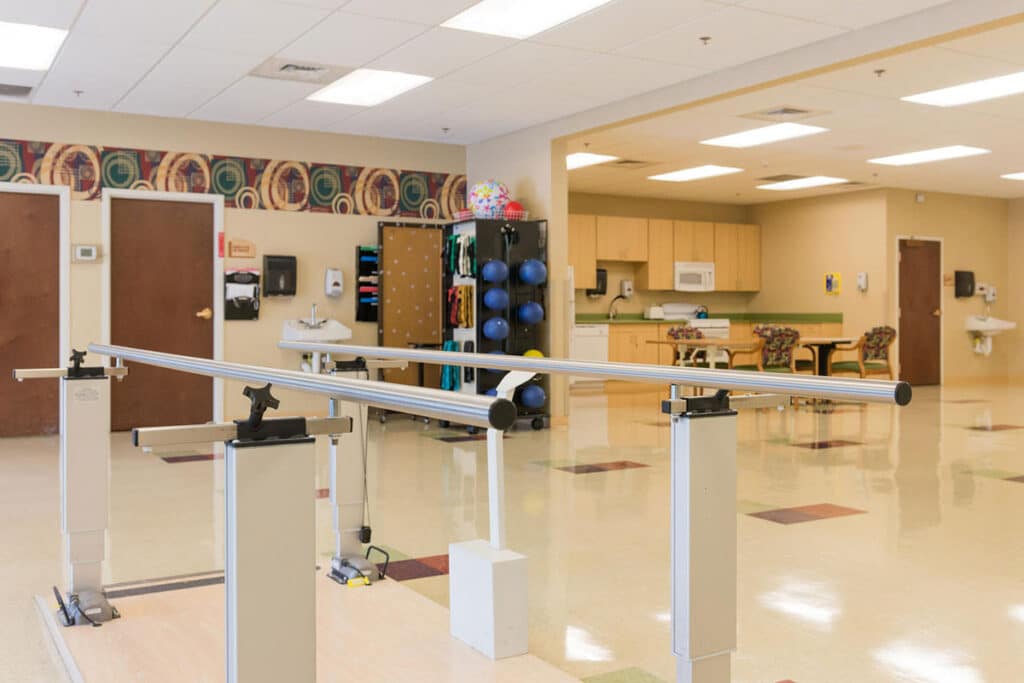
Each patient is carefully evaluated before a physical therapist creates an individualized treatment program. Treatment takes place in our rehab gym with a focus on:
- improving physical impairment
- coordination
- strength
- mobility
- pain
- preventing future injuries

Modalities We Offer
Our expansive rehab gym utilizes many advanced tools including ultrasound, OmniCycle Connect for motor skills, Nu-Step for strengthening, and more.
Occupational Therapy (OT)
What is the goal of occupational therapy?
Our occupational therapists help residents master tasks essential for daily living while maximizing their independence safely.
What types of skills will I improve?
- bathing
- dressing
- eating
- cooking
We also assist residents with impaired vision and/or hearing to thrive in their environments. This can involve teaching patients how to use adaptive equipment like shower chairs, walkers, utensils, wheelchairs, and more.

Speech Therapy
What is the goal of speech therapy?
Our speech therapists assess and help restore abilities in the areas of communication, swallowing, and cognition.
Skills range from:
- strengthening chewing and swallowing
- improving speech
- voice clarity
- comprehension
Who may benefit from speech therapy?
Treatment programs are designed to help residents affected by stroke, brain injury, dementia, and other neurological disorders. Speech therapists also work with residents suffering from hearing impairment, respiratory illnesses, and complex medical conditions.